
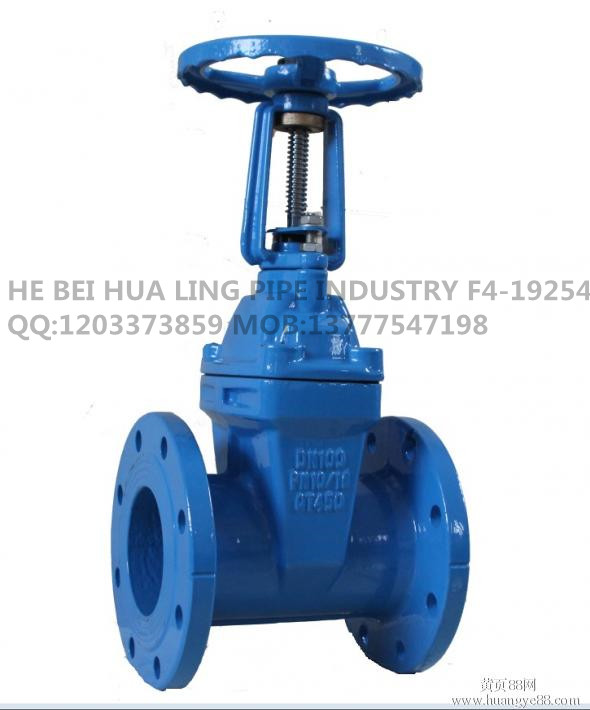
Long-term export soft seal gate valve, open stem gate valve copper gland gate valve
SKU
体积
尺寸
装箱数
重量
价格¥ ($) US dollar price changes with exchange rate
Detail
The gate has two sealing surfaces, the two sealing surfaces of the most commonly used pattern gate valves form a wedge, the wedge Angle varies with valve parameters, usually 50, and 2°52' when the medium temperature is not high. Wedge gate valve gate can be made into a whole body, called the rigid gate; It can also be made to produce micro-deformation of the gate, to improve the process, to make up for the Angle of the sealing surface in the process of deviation, this gate is called elastic gate.
The type of stem gate valve, according to the sealing surface configuration can be divided into wedge type gate valve and parallel gate type gate valve, wedge type gate valve can be divided into: single gate type, double gate type and elastic gate type; Parallel gate valves can be divided into single gate type and double gate type. According to the screw position of the valve stem, can be divided into open - stem gate valve andNon-rising stem gateTwo kinds.
When the gate valve is closed, the sealing surface can only rely on the medium pressure to seal, that is, only rely on the medium pressure to press the sealing surface of the gate to the other side of the valve seat to ensure the sealing surface, this is self-sealing. Most gate valves are sealed by force, that is, when the valve is closed, rely on external force to force the gate to the seat, to ensure the sealing surface.
